

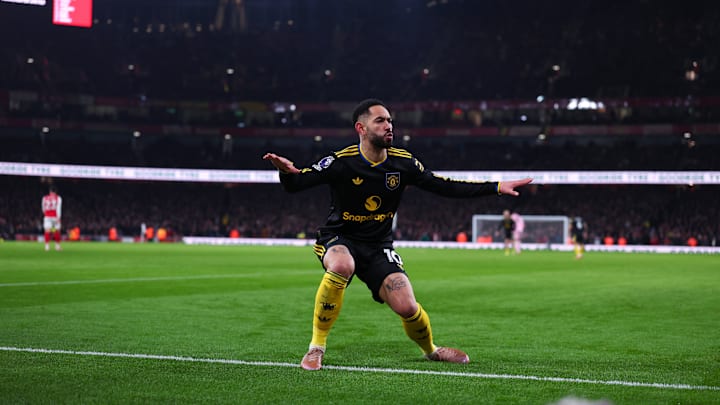
When Matheus Cunha was signed by Manchester United from Wolves for £62.5m last summer, much of the conversation did not revolve around his ability, but his style of play.
Cunha is a ball-dominant player, and was the focal point of Wolves' attack. How would a player like that adapt to not being the first option for his team? Coming into a team which was loaded with attacking talent, Cunha would have to let his teammates operate more. How would a player known for his strong personality react to not always getting the ball, or even not always playing?
United has been forced to sell players who didn't adapt to sharing the spotlight. Alejandro Garnacho was shifted out of the changing room after complaining when he was dropped by Ruben Amorim. Sometimes even the best footballers (even if Garnacho is far from one of those) need to accept a reduced role.
Many feared Cunha would not adapt well to a reduced role. A big personality who is unhappy can spread distaste in a changing room like a virus. Some declared Cunha's signing a risk.
Cunha has had a somewhat slow start to life at United. It's hardly his fault that he joined a team that deeply struggled to score goals, and the Brazilian's performances weren't cause for worry, but his output was limited.
Amorim's departure was also destined to limit Cunha's game time. Carrick's new system removed the 'double 10's' style that Amorim favoured, meaning Cunha would either have to compete with Bruno Fernandes for his role, or adjust to life as a striker or winger.
Cunha had to settle for the bench in Michael Carrick's first two games against Man City and Arsenal. To be dropped in two of United's biggest games of the season would, at the very least, deeply harm a player's confidence, if not cause outrage for a player who believes he deserves to play.
Matheus Cunha did not react like that. Cunha did all he could, and took the chances available to him. Michael Carrick's first piece of game management as United's interim head coach was to sub on Matheus Cunha in the 71st minute against Man City. It took less than five minutes before Cunha made an impact and provided the assist for Patrick Dorgu's goal.
In the game against Arsenal, Cunha was Carrick's first substitute again. He was subbed on with United leading the game, a statement of intent that United were not just here to protect the lead, but extend it. The gamble paid off, and Cunha scored a magnificent curling effort late on to give United the win.
It's unlikely that United will just use Matheus Cunha as a super sub going forward, especially with the news of Patrick Dorgu's injury. But Cunha's willingness to play a diminished role, and his unreserved approach to grabbing the opportunities presented to him, has definitely won him some supporters, both in the fanbase and within the coaching staff.
 Add us as a preferred source on Google