

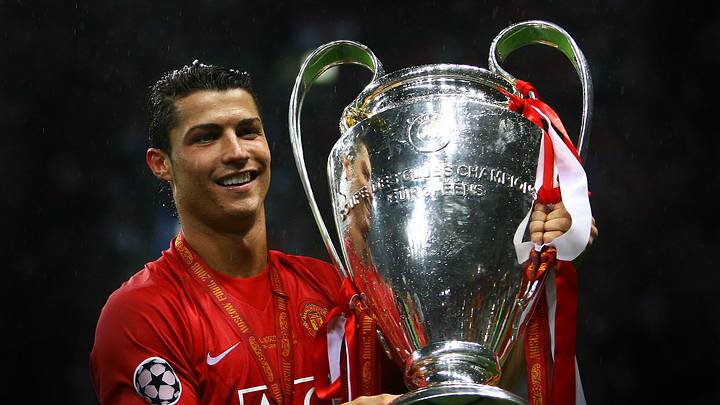
Former Manchester United star Cristiano Ronaldo has retired from the Portuguese national team.
The 41-year-old’s final appearance for his country, and his 234th overall, came in a 1-0 victory against Wales in September. Ronaldo would later leave the Portugal camp early after being an unused substitute in his nation’s 2-1 win against Norway, for which he received a £215 fine and a 30-day ban.
In a 1,740-word social media post, he apologised to his teammates, explained his decision and insisted he would not retire.
However, on Thursday, the five-time Ballon d’Or winner released a statement on Instagram, reversing his previous position and announcing his retirement from international football.
“To the Portuguese people. The day has come for me to hand back the number seven shirt of our national team. I never felt it belonged to me alone,” he said. “But for 23 years, I had the privilege and the responsibility of wearing it, defending it, and carrying it with me into stadium all around the world.
“Today, the time has come to pass it on to the future. It was not an easy decision. Because some decisions are not made with the mind alone. They are also made with the heart.
“A journey that began in August 2003 and changed my life forever has come to an end. When I look back at everything with the national team, I don’t just see the matches, goals, records or trophies. Goals fade. Trophies end up in museums. Records are eventually broken. But there is something that time can never erase: the place we hold in people’s hearts.”
Portugal estará sempre em mim pic.twitter.com/dnFj51rxmh
— Cristiano Ronaldo (@Cristiano) November 5, 2026
Cristiano Ronaldo and Manchester United - a bond forged in history
While Ronaldo’s time at United will remain contentious for years to come, largely because of the breakdown in relations during his second spell at the club, there is no denying the bond forged between the Portuguese forward and the Red Devils.
Signed for just £12 million at 18, Ronaldo quickly became one of the club’s greatest-ever players during his first six years at Old Trafford. He scored 118 goals in 292 appearances, helping the Red Devils secure three successive Premier League titles, an FA Cup, the FIFA Club World Cup and the 2007/08 Champions League.
During his time at the club, he also won the European Golden Shoe, the Puskas Award and the Premier League Player of the Year award in successive seasons.
In 2008, having helped United secure a historic Premier League and Champions League double, he claimed the first of his five Ballon d’Or awards.
Just a year later, he departed for Real Madrid in an £80 million deal, a fee that remains the biggest sale in Manchester United's history.
Over the course of the next 13 years, Ronaldo would ply his trade for Real Madrid, Juventus and Portugal, collecting countless honours along the way.
These included four more Champions League titles, four additional Ballon d’Or awards and the 2016 European Championship, before returning to the club that had first propelled him onto the global stage in 2022.
Whilst the comeback story started sweet, it slowly turned sour as United underperformed, Ronaldo was benched, and he and Erik ten Hag fell out, leaving the Portuguese forward to turn to Piers Morgan in a damning interview which spelt his exit.
Since then, Ronaldo has been a pioneer in the growing trend of high-profile players moving to Saudi Arabia, joining Al-Nassr, where he has scored 138 goals in 160 appearances.
The Portuguese titan now sits just 15 goals short of the 1,000-goal milestone, which he will undoubtedly have his sights set on reaching over the coming 12 months. Should he get there, he would become the first player in football history to achieve the remarkable feat.
Whatever has happened since, and however complicated his relationship with the club became, Ronaldo's legacy at Manchester United remains undeniable. For a generation of supporters, he was more than just a superstar in a red shirt—he was the player who helped define an era, and whose influence on the club and the game itself will endure long after his final appearance.
 Add us as a preferred source on Google